
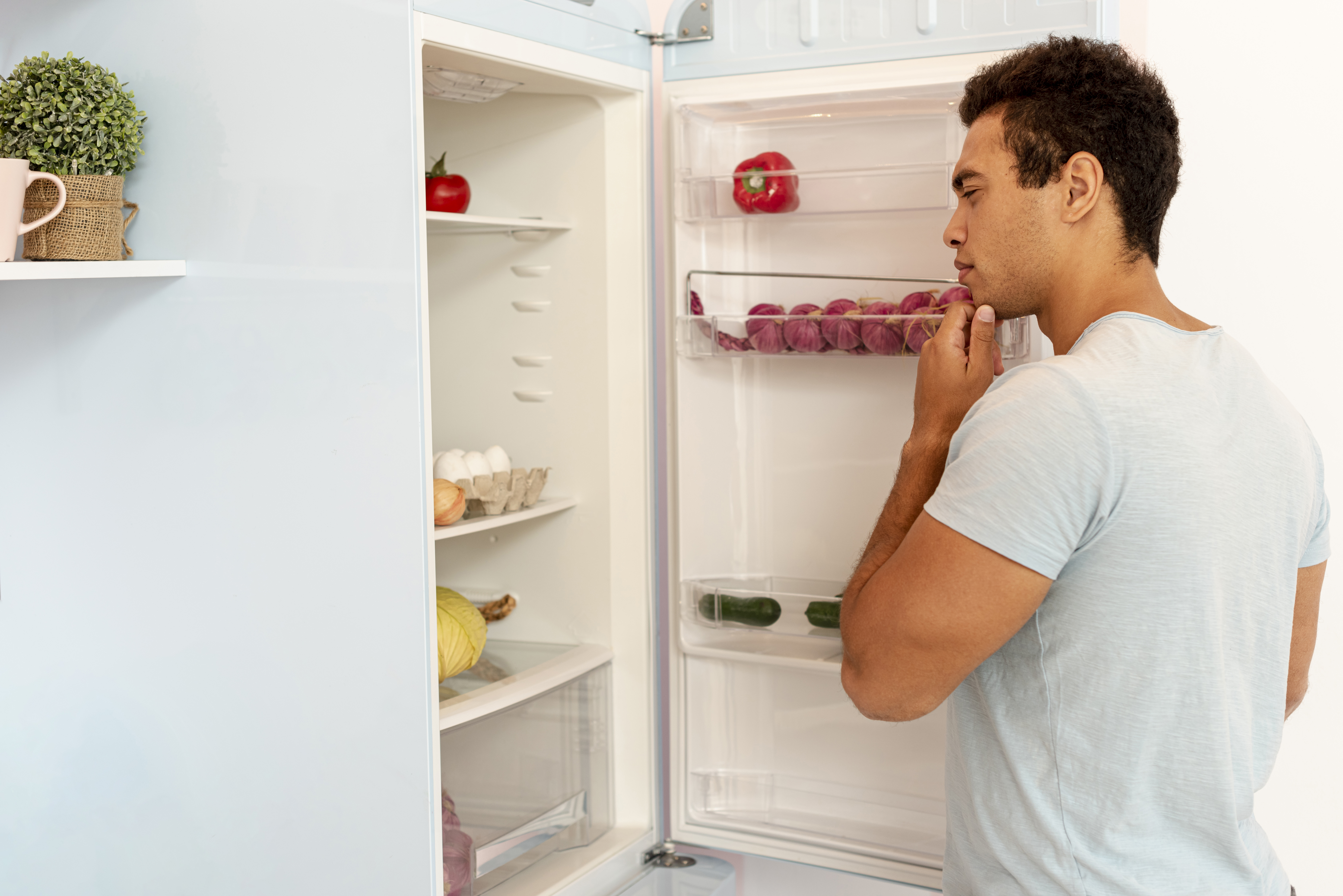
You’re hungry. There’s food in the house. And somehow, choosing what to eat feels impossible. You open the fridge, scan the shelves, close it again. Nothing sounds right. Everything feels like too much effort. You might even start wondering why something that should be simple feels so hard. If you’ve ever asked yourself, “Why can’t I decide what to eat when I’m hungry?”—this isn’t a self-control issue. It’s a brain and nervous system response.
Hunger and Stress Don’t Always Work Well Together
We often assume hunger should make decisions clearer. But when you’re stressed, mentally overloaded, or burned out, hunger can actually make decision-making harder. Hunger tells your body it needs energy. Stress tells your brain to conserve energy. When those two signals happen at the same time, your brain may slow down or shut down decision-making altogether. That’s when you feel stuck. Hungry but unable to choose. This isn’t laziness or pickiness. It’s your nervous system trying to manage limited resources.
Your brain has systems that handle different jobs. One system helps with planning, weighing options, and making choices. Another system focuses on safety, stress, and survival.
When stress is high, the brain shifts control away from the planning system and toward the survival system. This shift makes sense. It’s protective. But it also means things like decision-making, flexibility, and appetite awareness become harder to access. Add hunger into the mix, and the brain is being asked to make choices at the exact moment it feels least capable of doing so. That’s why you might notice:
-
A blank or overwhelmed feeling when you try to choose food
-
Strong cravings followed by uncertainty
-
Irritation or self-criticism around eating
-
A desire to eat something, but not knowing what
This pattern is often called decision fatigue.
Eating Takes More Mental Energy Than We Realize
Choosing what to eat isn’t just one decision—it’s a series of them. What sounds good? How much time do I have? Will this satisfy me? Is this the “right” choice? If you have a history of dieting, food rules, or body image stress, your brain has even more information to sort through. Each added rule increases mental effort. So when your brain is already tired, it may respond by freezing, avoiding the decision, or defaulting to the quickest option available. None of that means you’ve lost your ability to eat well. It means your brain is overloaded.
Stress doesn’t turn hunger off. But it can make hunger harder to interpret. You might feel physically hungry but emotionally disconnected from food. Or you might want comfort and fuel at the same time, which can feel conflicting. That’s because stress affects how clearly your brain receives and processes body signals. The signals are still there. They’re just quieter or mixed together.
This is why advice like “just listen to your hunger cues” can feel frustrating when you’re exhausted. Awareness requires mental capacity.
Many people notice this problem most in the evening, and there’s a reason for that. By the end of the day, your brain has already:
-
Made countless decisions
-
Managed emotions and expectations
-
Stayed focused for long periods
Mental energy is lower. So when hunger shows up, there’s less capacity left to plan or choose thoughtfully. That’s why dinner decisions can feel harder than breakfast, and why evening eating often feels rushed, emotional, or disconnected. This isn’t a lack of discipline. It’s cognitive fatigue.
Making Eating Easier When Decisions Feel Hard
When your brain is tired, the goal isn’t to make the “best” choice. It’s to make the choice easier. Supportive approaches might include:
-
Relying on familiar meals during busy times
-
Reducing options instead of increasing them
-
Choosing foods that feel both accessible and satisfying
-
Eating something simple first to reduce the intensity of hunger
Often, once your body has some fuel, your brain regains flexibility and the next decision feels less overwhelming. If choosing food feels hard right now, it can be because:
-
Your brain is managing stress
-
Your nervous system is under load
-
Hunger and fatigue are happening at the same time
You don’t need more willpower. You need support, simplicity, and enough food. So if you’re standing in the kitchen feeling stuck, try this reminder: “My brain is tired. I’m allowed to make this easier.” That’s not lowering the bar. That’s responding with care.